

About the Centre
BGCC was founded on the understanding that biodiversity is foundational to ecological balance, food security, cultural heritage, climate resilience, and human wellbeing. In the face of climate change, habitat loss, invasive species, and unsustainable exploitation, the Centre responds with scientific rigor and ethical stewardship.
It bridges:
- Classical Botany & Forestry
- Molecular Taxonomy & DNA Barcoding
- Conservation Genetics
- Ecology & Ecosystem Science
- GIS & Biodiversity Informatics
- Ethnobotany & Traditional Knowledge
- Sustainable Development & Livelihood Studies
Core Activities & Innovative Initiatives
Digitization of University Flora
- Comprehensive documentation of campus and regional flora
- Geo-referenced digital database
- High-resolution specimen imaging
- Online accessible archives
Digital Herbarium
A state-of-the-art repository supporting:
- Taxonomic authentication
- Research reference collections
- Integration with global biodiversity databases
Medicinal Plant Garden
(Inspired by Charak Samhita & Sushruta traditions)
A living repository integrating Ayurvedic knowledge with molecular validation and conservation science.
Threatened & Endangered Plant Garden
Dedicated ex-situ conservation space for rare, vulnerable, and endemic taxa.
Biodiversity Park
An ecological demonstration landscape promoting:
- Habitat diversity
- Ecosystem interaction
- Educational trails
- Awareness programs
Unique & Rare Plant Collections
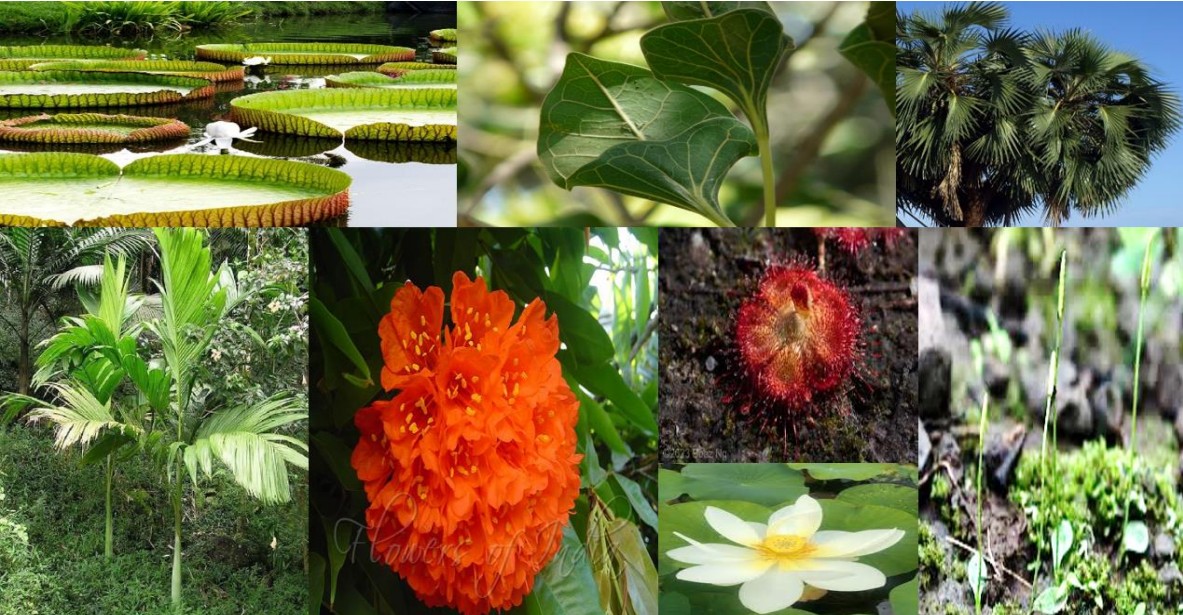
The Centre conserves remarkable species including:
- Victoria amazonica
- Ficus krishnae
- Hyphaene thebaica
- Bentinckia nicobarica
- Brownea coccinea
- Drosera burmanni
- Nelumbo nucifera
- Ophioglossum sp
DNA Barcoding & Gene Bank Initiative
The Centre has launched DNA Barcoding of Medicinal Plants, linking authenticated genetic data with international repositories such as NCBI Gene Bank.
This ensures:
- Accurate species identification
- Prevention of adulteration
- Molecular documentation of biodiversity
- Strengthened conservation genetics